
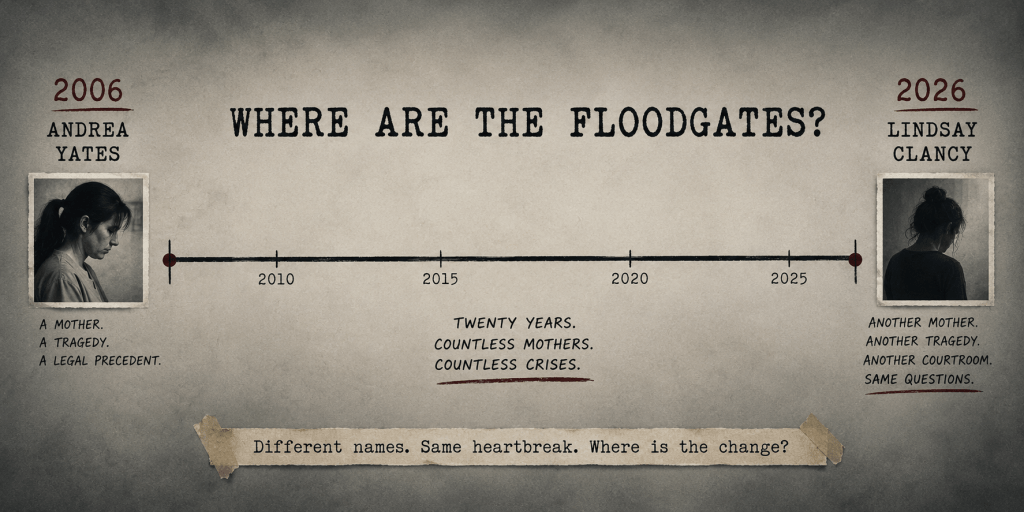
Twenty years later, a new face to a new unthinkable tragedy, & we’re still warning about a precedent the Andrea Yates case never set. Is the slippery slope in the room with us?
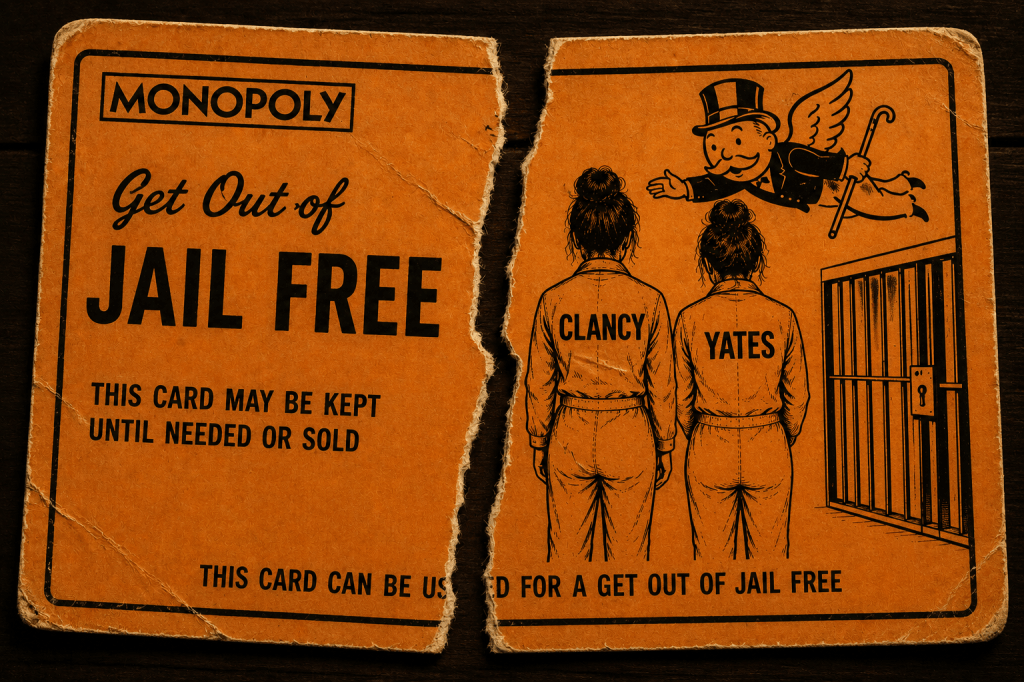
One argument I keep seeing about the Lindsay Clancy trial is that finding her not guilty by reason of insanity—or, more accurately in Massachusetts, not guilty by reason of lack of criminal responsibility—would somehow create a dangerous precedent. Where does it end? What stops every mother who harms her children from claiming postpartum depression? What about Andrea Yates? What about Casey Anthony?
That last comparison is particularly wild, but we’ll get there. The insanity defense is difficult to prove, rarely successful, and still somehow treated like a get-out-of-jail-free card. It isn’t.
A verdict in Lindsay Clancy’s case does not create a new rule that mothers who kill their children get a pass. It means twelve jurors looked at one defendant, one set of facts, and one specific moment in time and decided whether the Commonwealth proved beyond a reasonable doubt that she was criminally responsible when she killed her children.
The bar is high.
Having postpartum depression isn’t enough. Having a psychiatric diagnosis isn’t enough. Taking psychiatric medication isn’t enough. Being suicidal isn’t enough. Even experiencing psychosis at some point in time doesn’t automatically make someone legally insane.
The question is what was happening in Lindsay Clancy’s mind when she killed her children.
Did mental illness leave her without substantial capacity to appreciate the wrongfulness of what she was doing? Or without substantial capacity to conform her behavior to the requirements of the law?
That is the question.
And it is supposed to be difficult.
“But She Planned It”
This seems to be the piece people struggle with most. She sent Patrick out. She knew how long he would be gone. She performed a series of organized actions. Therefore, she couldn’t have been psychotic.
Except psychosis does not require someone to be wandering around completely detached from the physical world, unable to make a sandwich or send a text message.
A person experiencing psychosis can drive a car. Hold a conversation. Make a phone call. Follow instructions. Take care of basic needs. And yes, they can plan.
The important question is what their brain believes while they are doing those things.
Someone acting rationally on completely irrational information generated by a diseased mind can look remarkably organized from the outside.
I think this is where our discomfort with psychosis really begins.
We Don’t Want to Believe the Mind Can Do This
Psychosis scares people in a way depression and anxiety generally don’t.
We have learned how to talk about those illnesses. We put “mental health matters” on T-shirts. We tell people to reach out. We remind them that it’s okay not to be okay.
Psychosis asks something much harder of us.
It asks us to accept that the human brain—the same organ we depend on to tell us what is real—can malfunction so profoundly that a person can experience a reality that does not exist to anyone else.
And they don’t necessarily know it.
That’s terrifying.
I think that’s partly why people keep trying to find evidence that Lindsay must have known exactly what she was doing. Planning. Google searches. Phone calls. Details before and after the killings. Anything that reassures us that there was still a rational person sitting behind the controls.
Because the alternative is much scarier.
The alternative is admitting that sometimes the controls themselves malfunction.
Psychosis doesn’t conveniently announce itself by making someone look “crazy” every second of the day. People can move between moments of clarity and profound distortion. They can conceal symptoms. They can be frightened by their own thoughts. They can know something is happening to them without understanding exactly what it is.
And sometimes they can look normal.
That’s the part I think people are resisting.
Because if psychosis always looked unmistakably like psychosis, we’d feel safer.
We could identify it.
We could separate “those people” from ourselves.
But the human brain doesn’t give us that comfort.
A Peek Into Our Own Fear
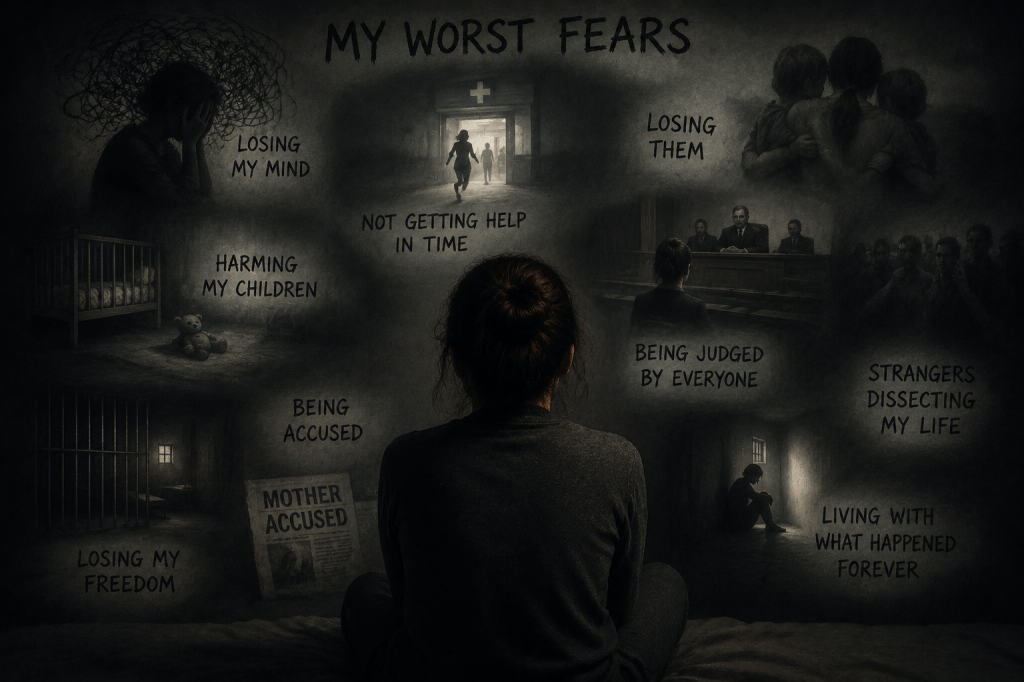
There is another reason I think cases like Lindsay Clancy’s provoke such visceral reactions.
We don’t just fear what happened.
We fear the idea that a human mind could become capable of experiencing reality so differently from ours.
It is much more comforting to believe that someone who does something incomprehensible must simply be evil.
Evil creates distance.
Evil says she is nothing like me.
Psychosis doesn’t give us that distance.
Psychosis says that a brain can become sick.
That a loving person can become unrecognizable to herself.
That intelligence doesn’t necessarily protect you.
Education doesn’t protect you.
Being a nurse doesn’t protect you.
Being a good mother doesn’t protect you.
Knowing what mental illness looks like doesn’t necessarily protect you.
And perhaps most frighteningly, loving your children doesn’t make your brain immune to disease.
That doesn’t mean everyone experiencing psychosis is dangerous. The overwhelming majority are not, and mental illness should never be casually equated with violence.
But pretending severe psychosis cannot radically distort someone’s perception of reality doesn’t make anyone safer either.
It just makes psychosis easier for the rest of us to emotionally tolerate.
What About Andrea Yates?
Andrea Yates is actually worth discussing.
In 2001, Yates drowned her five children in the bathtub of her Texas home. She had an extensive history of severe postpartum psychiatric illness, hospitalizations and psychosis. Her first conviction was eventually overturned, and at her second trial she was found not guilty by reason of insanity.
She was committed to a psychiatric hospital.
And here is what seems like the most obvious response whenever someone invokes Yates as evidence of where a Lindsay Clancy acquittal could lead:
Andrea Yates was found not guilty by reason of insanity twenty years ago.
So where is the slippery slope?

We didn’t suddenly start acquitting parents who kill their children. Defendants didn’t discover a magical combination of the words “mental illness” that made murder charges disappear.
The insanity defense remained exactly what it was: difficult to prove, rarely successful, and decided case by case.
The floodgates never opened.
The slope never slid.
Apparently, it is still searching for a slide.
Yates’s acquittal didn’t destroy the criminal justice system.
It demonstrated why the insanity defense exists.
Lindsay Clancy also isn’t Andrea Yates 2.0. Their psychiatric histories are different. Their symptoms were different. Their treatment histories were different. Their circumstances were different. They were prosecuted in different states under different legal standards.
But their cases force us to confront the same uncomfortable idea:
Can someone intentionally perform a physical act while being too mentally ill to be criminally responsible for that act?
Our legal system has answered that question for centuries.
Yes.
Under very specific circumstances, yes.
And Then Somehow We Get to Casey Anthony
I’ve actually seen people compare Lindsay Clancy to Casey Anthony.
This makes almost no sense legally.
Casey Anthony did not argue that she killed her daughter while legally insane.
Her jury was essentially being asked:
Did the prosecution prove beyond a reasonable doubt that Casey Anthony murdered Caylee?
Lindsay Clancy’s jury is answering an entirely different question:
We know Lindsay is alleging that she killed her children in her plea. Did the Commonwealth prove beyond a reasonable doubt that she was criminally responsible when she did it?
You can hate both women.
You can sympathize with neither.
You can believe both cases are horrifying.
None of that makes the legal questions remotely the same.
“Not Guilty” Doesn’t Mean “Nothing Happened”
I think some of the anger surrounding this case comes from the language itself.
Not guilty.
People hear those words and translate them into:
She didn’t do anything.
Or:
She’s innocent.
Or even:
Those children don’t matter.
But nobody is disputing that Cora, Dawson and Callan died.
Nobody is suggesting their deaths weren’t horrific.
Nobody gets to undo what happened to them.
An insanity verdict addresses something narrower: whether the person who committed those acts possessed the mental capacity required for the state to hold her criminally responsible.
And a lack-of-criminal-responsibility verdict doesn’t necessarily mean someone walks out of the courthouse and goes home. Massachusetts has a process for psychiatric commitment following such a verdict. A person can remain confined in a psychiatric facility as long as the legal requirements for continued commitment are met.
That isn’t the same thing as prison. In paper.
It’s not supposed to be.
Because punishment and psychiatric confinement exist for fundamentally different reasons. But that’s an essay for another day.
It’s also another place where the “get-out-of-jail-free card” argument falls apart.
Nobody wins an insanity defense and collects $200 on the way out. Lindsay Clancy likely already knows this. Andrea Yates definitely does: she declines annual parole hearings, opting to stay in a psychiatric facility over freedom. Is there even a difference between a state-run hospital and freedom to Andrea Yates?
Three Children Can Matter While Mental Illness Matters Too
This is where nuance seems to completely fall apart.
People act as though acknowledging Lindsay’s psychiatric illness somehow diminishes what happened to her children.
It doesn’t.
Cora mattered.
Dawson mattered.
Callan mattered.
Their father and their families will live with something unimaginable for the rest of their lives.
And Lindsay’s mental state still matters.
Both things can be true at exactly the same time.
In fact, if we genuinely care about preventing another family from experiencing something like this, then understanding why it happened matters enormously.
Calling something evil may express how horrified we are.
It doesn’t necessarily explain anything.
And explanations matter when you’re trying to prevent something from happening again.
So Where Does It End?
Whenever someone asks this, my answer is pretty simple.
It ends with the legal standard.
A diagnosis doesn’t get you there.
Postpartum depression doesn’t get you there.
Medication doesn’t get you there.
A sympathetic life story doesn’t get you there.
Being a mother doesn’t get you there.
You still have to satisfy the law’s requirements regarding criminal responsibility.
And every future defendant will have to do the exact same thing.
That isn’t a slippery slope.
That’s a legal system recognizing something most of us intuitively understand in virtually every other area of life: the state of a person’s mind matters when we decide how responsible they are for their behavior.
We already make distinctions between accidents and intentional acts. Between children and adults. Between people with certain cognitive impairments and people without them. Between someone who understands what they’re doing and someone whose mind has become so profoundly disordered that their understanding of reality has collapsed.
Criminal responsibility has never been determined solely by asking, Did this person’s body perform the act?
If it were, we wouldn’t need an insanity defense at all.
The hardest part of the Lindsay Clancy case may be accepting that there might not be a conclusion that feels satisfying.
Three children are dead.
There is no verdict that fixes that.
There is no sentence that brings them back.
There is only the much harder responsibility of determining what happened, what Lindsay’s mind was capable of understanding at that moment, and what the law requires us to do with that information.
Maybe that’s why we resist psychosis so fiercely. It forces us to look at something we’d rather keep at a safe distance: how much of who we are depends upon a brain we trust to tell us the truth.
If the Commonwealth proved Lindsay was criminally responsible, then the jury should find her guilty.
If it didn’t, they shouldn’t.
That’s not giving Lindsay Clancy a pass.
That’s not disrespecting her children.
And it’s not opening some imaginary floodgate.
It’s applying the law even when the facts are so horrific that our fear desperately wants the answer to be simpler.


Leave a Reply